Orthodontic health is about how your teeth, bite, and jaws work together. Here is what properly aligned teeth do for oral hygiene, bite function, and long-term dental health, and where the evidence is strongest.
QUICK ANSWER
Orthodontic health matters because properly aligned teeth are easier to clean, chew evenly, wear more slowly, and are less likely to be injured. Straight teeth are the visible result. The health benefit comes from the bite underneath. At Brayces Orthodontics, with offices in Absecon, Egg Harbor Township, Somers Point, Marmora, and Wildwood, New Jersey, our orthodontists evaluate how the teeth, jaws, and jaw joints work together, not just how the front teeth look. Not every crooked tooth needs treatment, but bite problems rarely fix themselves, which is why an evaluation matters.
KEY TAKEAWAYS
- Orthodontic health describes how well the teeth, bite, and jaws fit and function together. A straight smile is one result of good orthodontic health, not the definition of it.
- The strongest research evidence for a health benefit is injury prevention. A 2019 meta-analysis found that 12-year-olds whose upper front teeth project more than 5 millimeters have about 1.8 times the odds of a dental injury, and a 2018 Cochrane review found early treatment lowers that risk.
- Aligned teeth are easier to brush and floss, which makes daily hygiene more effective.
- An uneven bite concentrates chewing force on a few teeth, which can lead to chipping, uneven wear, and sore jaw muscles over time.
- The AAO recommends a first orthodontic check-up no later than age 7, and healthy teeth can be moved at any age.
Your daughter's front teeth stick out far enough that her lip doesn't quite close over them. A crown you had placed years ago keeps cracking at the same corner. You brush twice a day and still get the same talk about your lower front teeth at every cleaning.
Those are three different complaints, and all three are orthodontic health problems. Dr. Bray served as president of the AAO, and our four orthodontists have spent more than 40 years explaining this to South Jersey families.
Here is the point we keep coming back to. Straight teeth are what people notice. Health lives in how the teeth meet, and it's easy to miss because it stays quiet until something chips, wears down, or starts to ache.
What Does Orthodontic Health Actually Mean?
Orthodontic health means your teeth, jaws, and jaw joints are positioned so they fit together and work comfortably. Dentists call the way the upper and lower teeth meet your occlusion. A problem with it is a malocclusion, which simply means a bad bite.
That definition has three parts. The teeth should form a clean, even arch. The upper and lower arches should meet so chewing force spreads across many teeth instead of a few. The jaws should also be in proportion to each other and to the face, which is largely set by growth during childhood.
A smile can look straight from the front and still fail the second and third tests. That is why we examine the bite from the side, check how the back teeth meet, and take digital scans rather than judging from a photo.
The Most Common Bite Problems and Why They Matter
| Bite problem | What it looks like | Why it matters for health |
|---|---|---|
| Crowding | Teeth overlap or twist because there is not enough room | Overlaps trap plaque where a brush cannot reach, and crowded lower front teeth are a common site of gum recession |
| Spacing | Gaps between teeth | Food packs into gaps and irritates the gums; wide gaps can let neighboring teeth drift |
| Protruding front teeth (large overjet) | Upper front teeth stick out well past the lower teeth | The clearest health risk: these teeth are far more likely to be chipped or knocked out in a fall or collision |
| Deep bite | Upper front teeth cover most or all of the lower front teeth | Lower teeth can bite into the roof of the mouth, and front teeth wear each other down |
| Underbite | Lower teeth sit in front of the upper teeth | Chewing is less efficient and front teeth wear unevenly; often tied to jaw growth, so timing matters |
| Crossbite | Some upper teeth bite inside the lower teeth | Can shift the jaw to one side when closing, leading to uneven wear and asymmetric jaw growth in children |
| Open bite | Front teeth do not touch when the back teeth are closed | Makes biting into food difficult and puts all the chewing load on the back teeth |
Why Are Straight Teeth Easier to Keep Clean?
Straight teeth are easier to keep clean because a toothbrush and floss can reach every surface. Crowded or rotated teeth create overlaps where plaque collects, and bristles can't reach, so the same spots stay inflamed from one dental visit to the next.
We want to be careful with the next step in that logic, because many articles overstate it. Easier cleaning makes good hygiene more effective. It does not make hygiene automatic, and it does not replace it.
A 2020 systematic review in the American Journal of Orthodontics and Dentofacial Orthopedics examined whether malocclusion and orthodontic treatment affect oral health and concluded that, apart from injury risk, the research is too limited to prove that straightening teeth by itself prevents cavities or gum disease. We think patients deserve to hear that plainly.
What we do see in our practice is practical. Patients who finish treatment tell us flossing takes a fraction of the time it used to, and the brushing habits they build around braces or Invisalign often stick for life. Those habits, more than alignment alone, protect the teeth.
BRUSH AND FLOSS
- Brush twice a day for two minutes, angling the bristles toward the gumline where crowded teeth overlap.
- Floss once a day. If teeth overlap tightly, a floss threader or water flosser reaches spots string floss skips.
- During the shore season, rinse with water after boardwalk taffy, caramel, or fudge. Sticky sugar in a crowded overlap is the hardest plaque to remove.
- Keep regular cleanings with your general dentist during and after orthodontic treatment. Orthodontics does not replace them.
How Does Bite Alignment Affect Chewing, Wear, and Jaw Comfort?
A well-aligned bite spreads chewing force across many teeth at once, which is how teeth are designed to work. When the bite is uneven, a few teeth take the load for every meal, and those teeth tend to chip, flatten, or crack fillings and crowns long before their neighbors.
The pattern is often visible years before it hurts. We look for flattened edges on the front teeth, small chips, notches near the gumline, and a jaw that slides to one side as the patient closes. Each of those is a sign that force is landing in the wrong place.
Jaw joint pain needs an honest caveat. Problems with the temporomandibular joint (TMJ), the hinge in front of each ear, have many causes, including clenching, stress, and injury. Straightening teeth is not a cure for jaw joint pain, which is why we evaluate TMJ symptoms separately rather than promising that braces will fix them.
Do Protruding Front Teeth Raise the Risk of Injury?
Yes. Upper front teeth that stick out past the lower teeth are more exposed in a fall, a collision on the field, or a bump on a bike, and orthodontic treatment has the strongest research supporting this health benefit.
A 2019 systematic review and meta-analysis published in Dental Traumatology found that 12-year-olds with upper front teeth projecting more than 5 millimeters beyond the lower teeth had about 1.8 times the odds of a dental injury compared with children whose front teeth sat closer together. For children still in baby teeth, the risk rose at 3 millimeters or more.
Treatment lowers that risk. A 2018 Cochrane review of randomized trials found that early orthodontic treatment for children with prominent upper front teeth reduced new injuries to those teeth compared with waiting to treat everything in adolescence. The authors rated the evidence as low to moderate quality, so the direction is clear even if the exact size of the benefit is not.
This is personal for a shore community. Between fall soccer, spring lacrosse, bikes on the boardwalk, and summer in the surf from Absecon to Wildwood, children's front teeth take a lot of chances. If your child's front teeth stick out, we would rather see them early than see them in our emergency care chair.
PROTECT
- Have a child with protruding front teeth evaluated by age 7, when growth can still be guided.
- Wear a mouthguard for every contact or collision sport. We provide a protective mouthguard for patients in braces.
- If a permanent tooth is knocked out, hold it by the crown, not the root, keep it moist in milk, and get to a dentist or our office within the hour.
Does Orthodontic Treatment Change Confidence and Quality of Life?
Absolutely, and the benefits can reach far beyond a beautiful smile!
Orthodontic treatment doesn't just change how teeth look. It can change how people feel about themselves, how confidently they interact with others, and how freely they share their smiles with the world.
And there's research to support it! A 2017 meta-analysis published in the American Journal of Orthodontics and Dentofacial Orthopedics found meaningful improvements in emotional and social well-being among patients who received orthodontic treatment before age 18. In other words, a straighter smile can make a real, measurable difference in a young person's quality of life.
While the researchers acknowledged that more high-quality, long-term studies are needed, their findings reinforce something we've seen firsthand: A confident smile can impact more than just the teeth.
We've seen teenagers who once covered their mouths when they laughed become the first ones to smile for a picture. We've watched patients who were once self-conscious about their teeth light up when they see their finished smiles. And those moments are among the most rewarding parts of what we do.
And this transformation isn't just for teenagers! Adults experience these changes, too. Many of our adult patients spent years, or even decades, wishing they had done something about their smiles. When they finally take that step, they often discover that the confidence they gain is just as meaningful as the beautiful results they see in the mirror.
If you've ever wondered whether it's too late to get the smile you've always wanted, we created a separate guide explaining why orthodontic treatment at any age can be one of the most rewarding investments you make in yourself.
Because a beautiful smile is about more than looking different. It's about feeling confident enough to let the world see the real you.
COULD YOUR BITE BE HOLDING BACK YOUR BEST SMILE?
You might be surprised by what a healthier, more confident smile could do for you!
Whether you're concerned about crooked teeth, an uncomfortable bite, or simply wondering if orthodontic treatment could make a difference, we're here to help you discover what's possible.
Your FREE consultation at any of our five convenient South Jersey locations includes a digital scan, a personalized evaluation, and an honest recommendation from our team.
No pressure. No obligation. Just expert guidance and an exciting first look at what's possible for your smile!
Your smile transformation could start today! Call 609-272-9237 or schedule your FREE consultation online. We can't wait to meet you!
When Should Orthodontic Health Be Checked?
The AAO recommends that every child have a first check-up with an orthodontist no later than age 7. By that age, the first permanent molars and front teeth have come in, which lets an orthodontist see how the bite and jaws are developing while there is still time to guide growth.
A check-up is not the same as starting treatment! In fact, most 7-year-olds we see don't need braces or aligners right away. Instead, we welcome them into our Little Smiles Club, where we make monitoring their growing smiles a fun, positive, and exciting experience! Through regular growth and development check-ups, we can identify potential concerns early and help ensure that, if orthodontic treatment is needed, it begins at just the right time.
For adults, the answer is simpler. Healthy teeth can be moved at any age. The conditions are healthy gums and bone, so active gum disease must be treated first, and adult treatment can run longer because the jaws have finished growing.
Does Every Crooked Tooth Need Treatment?
Not every smile needs orthodontic treatment, but every smile deserves the opportunity to be its healthiest and most confident! Mild crowding that is easy to clean, doesn't interfere with your bite, and isn't getting worse may not require treatment. Our goal isn't perfection. It's helping you enjoy a beautiful, healthy smile that functions comfortably for years to come.
When we evaluate your smile, we focus on three important things:
Clean. Are your teeth easy to brush and floss, or could crowding make it harder to maintain healthy teeth and gums?
Function. Does your bite work comfortably and efficiently, or are certain teeth experiencing extra pressure, wear, or damage?
Stability. Is your smile likely to remain healthy and balanced, or could shifting teeth and bite changes create future concerns?
If everything looks great, we'll celebrate that with you! If we see opportunities to improve your smile, we'll explain your options and help you understand the potential benefits.
Because orthodontics isn't just about straighter teeth. It's about creating healthier bites, beautiful smiles, and confidence that can last a lifetime!
What Does Treating a Bite Problem Involve?
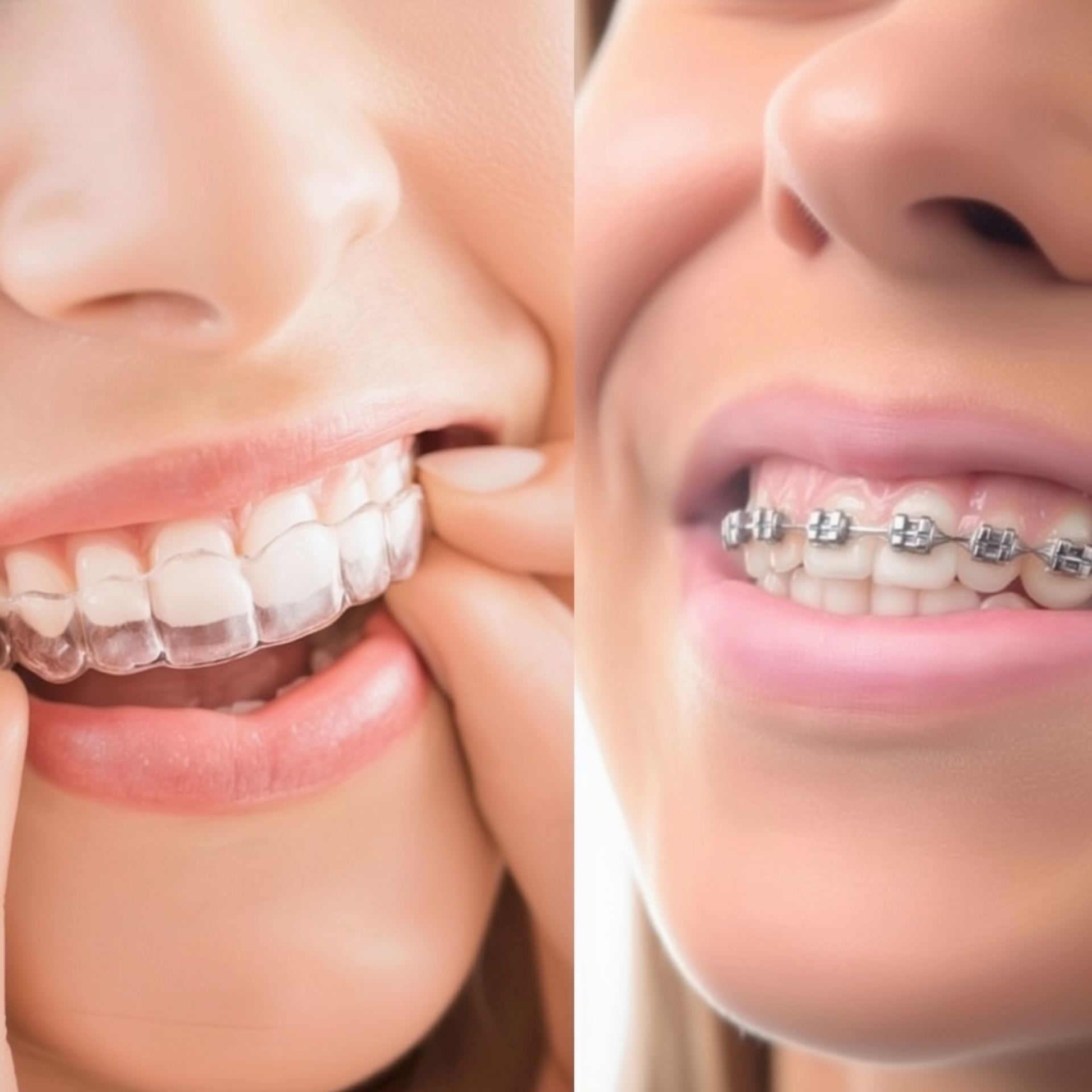
Treatment moves the teeth, and sometimes guides the jaws, into a position where they fit and function. The two main tools are braces, in metal or clear ceramic, and Invisalign clear aligners. Both can correct most bite problems. The right choice depends on the specific tooth movements, the patient's age, and how reliably aligners will be worn.
Treatment length depends on the complexity of the movement, the appliance, and how consistently the patient follows instructions. In our practice, most comprehensive braces cases average 15 to 18 months, with visits roughly every four to eight weeks. Simple alignment cases finish sooner, and jaw growth cases can take longer.
The last step is the one patients underestimate. Retainers hold the new bite while the bone and gums settle, and teeth drift for life without them. We review a wear schedule with every patient at the end of treatment, because a healthy bite is only a health benefit if it stays put.
Why South Jersey Families Choose Brayces Orthodontics for Orthodontic Health
- Bite diagnosis, not just a smile check. iTero 3D digital scanning and digital treatment planning let us measure how the teeth and jaws meet, so the plan addresses function as well as appearance.
- Board-certified expertise. Dr. Bray and Dr. Tarby are both ABO board-certified, and Dr. Bray is a Diplomate of the College of Diplomates of the ABO.
- Four orthodontists who trained together. Dr. Chenman and Dr. Lerman trained under Dr. Bray and Dr. Tarby at Temple University's Kornberg School of Dentistry, so every office follows the same diagnostic approach.
- Growth monitoring for children. Our Little Smiles Club watches jaw and bite development after the age-7 visit, so treatment starts when it will do the most good and not before.
- More than 40 years in the same communities. Our team has treated South Jersey families for more than 40 years, with five offices in Absecon, Egg Harbor Township, Somers Point, Marmora, and Wildwood, and evening and Saturday hours.
- Continuity of care. Our Patient Manager System means you see the same treatment team at each visit, which matters when the goal is a stable, healthy bite over many months.
FINAL ANSWER
Orthodontic health matters because the bite does the work. Teeth that meet properly share chewing force, wear slowly, stay cleaner, and are less likely to be injured, and those benefits last for decades. Straight teeth are the part you can see. The part worth protecting is underneath. Not everyone needs treatment, and an orthodontist should be willing to say so. What everyone does need is an evaluation that looks at the bite, not just the smile, at age 7 for children and at any age for adults who have been putting it off.
START YOUR SMILE JOURNEY TODAY
Brayces Orthodontics has helped South Jersey families build standout smiles for more than 40 years. Schedule a complimentary consultation at our Absecon, Egg Harbor Township, Somers Point, Marmora, or Wildwood office.
Call 609-272-9237 or Schedule Here! Same-day braces and free Invisalign consultations are available, and we accept most dental insurance with interest-free payment plans.
Frequently Asked Questions About Orthodontic Health
Does orthodontic health matter if my teeth do not bother me?
Absolutely! A healthy smile is about more than how your teeth look or feel today. Even without discomfort, misaligned teeth or bite problems can contribute to uneven tooth wear, difficulty cleaning certain areas, and unnecessary stress on individual teeth. An orthodontic evaluation helps identify these concerns early, giving you the opportunity to protect your oral health and enjoy a beautiful, confident smile for years to come.
Is it too late to improve orthodontic health as an adult?
Not at all! It's never too late to invest in a healthier, more confident smile. Teeth can be moved successfully at almost any age when the gums and supporting bone are healthy. Modern options like Invisalign clear aligners and ceramic braces make orthodontic treatment more comfortable and discreet than ever. Whether you're 25 or 65, orthodontic care can improve your bite, make your teeth easier to maintain, and give you a smile you'll love sharing.
Do I need braces if my teeth are only slightly crooked?
Even minor crowding or crooked teeth may benefit from orthodontic treatment. Small alignment issues can sometimes make brushing and flossing more challenging or affect how your teeth come together when you bite. Correcting these concerns early may help prevent unnecessary wear and support long-term dental health. Not every minor imperfection requires treatment, but an orthodontic consultation can help you understand the benefits of improving your alignment and explore your options.
Can orthodontic treatment improve more than just my smile?
Definitely! While a beautiful smile is one of the most exciting benefits of orthodontic treatment, the advantages can go much further. Properly aligned teeth are often easier to brush and floss, and a balanced bite can help distribute chewing forces more evenly. Orthodontic treatment can also address certain functional concerns related to biting and chewing. The goal is to create a smile that not only looks wonderful but also functions well and supports your long-term oral health.
When is the best time to schedule an orthodontic evaluation?
The best time is often sooner than you think! The American Association of Orthodontists recommends that children have their first orthodontic evaluation by age 7, when developing jaw and bite concerns can be identified early. However, orthodontic evaluations are valuable for teenagers and adults, too. An early evaluation doesn't necessarily mean treatment will begin immediately. It simply allows your orthodontist to recommend the right care at the right time, helping you achieve a healthy, beautiful smile that lasts a lifetime.
Sources
- American Association of Orthodontists. Orthodontics for Children: Developing a Healthy Smile. https:/
/ aaoinfo. org/ child- orthodontics/ - American Association of Orthodontists. National Orthodontic Health Month Moving to March in 2027. August 12, 2026. https:/
/ www2. aaoinfo. org/ national- orthodontic- health- month- moving- to- march- in- 2027/ - Arraj GP, Rossi-Fedele G, Dogramaci EJ. 2019. The association of overjet size and traumatic dental injuries: A systematic review and meta-analysis. Dental Traumatology 35(4-5):217-232. DOI 10.
1111/ edt. 12481. https:/ / doi. org/ 10. 1111/ edt. 12481 - Batista KBSL, Thiruvenkatachari B, Harrison JE, O'Brien KD. 2018. Orthodontic treatment for prominent upper front teeth (Class II malocclusion) in children and adolescents. Cochrane Database of Systematic Reviews, Issue 3, Art. No. CD003452. DOI 10.
1002/ 14651858. CD003452. pub4. https:/ / doi. org/ 10. 1002/ 14651858. CD003452. pub4 - Javidi H, Vettore M, Benson PE. 2017. Does orthodontic treatment before the age of 18 years improve oral health-related quality of life? A systematic review and meta-analysis. American Journal of Orthodontics and Dentofacial Orthopedics 151(4):644-655. DOI 10.
1016/ j. ajodo. 2016. 12. 011. https:/ / doi. org/ 10. 1016/ j. ajodo. 2016. 12. 011 - Macey R, Thiruvenkatachari B, O'Brien K, Batista KBSL. 2020. Do malocclusion and orthodontic treatment impact oral health? A systematic review and meta-analysis. American Journal of Orthodontics and Dentofacial Orthopedics 157(6):738-744.e10. DOI 10.
1016/ j. ajodo. 2020. 01. 015. https:/ / doi. org/ 10. 1016/ j. ajodo. 2020. 01. 015
About the Author
Dr. Robert James Bray is an orthodontist at Brayces Orthodontics and a past president of the American Association of Orthodontists. He has spent his career explaining to South Jersey families that a healthy bite, not just a straight smile, is the real goal of orthodontic care.
This article provides general educational information about orthodontic health and is not a substitute for professional advice. Individual orthodontic needs differ, and whether a particular bite problem requires treatment can only be determined through an in-person examination by a qualified orthodontist. Jaw joint symptoms in particular have many possible causes and should be evaluated separately from tooth alignment.