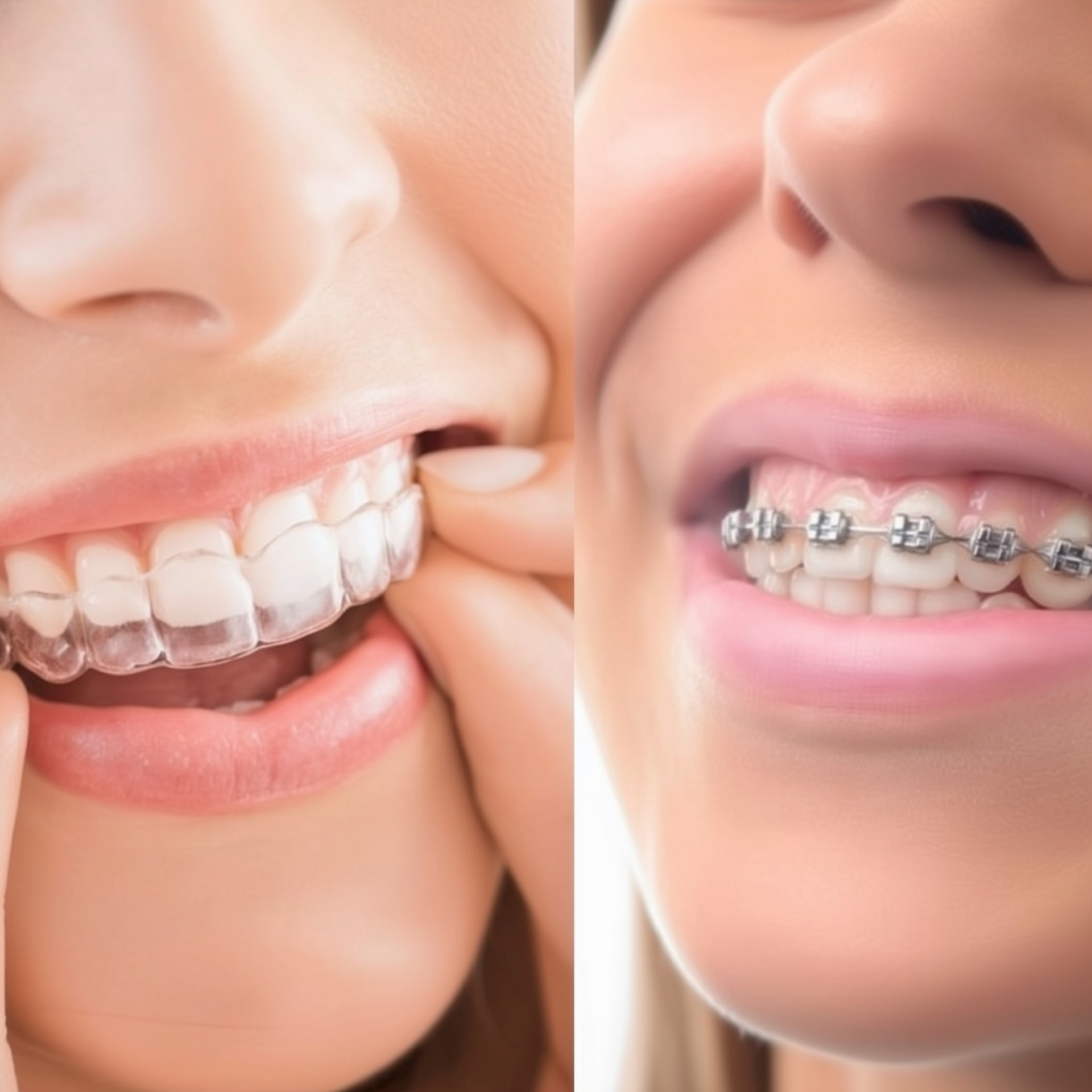

Learn how Brayces Orthodontics helps you protect your results with retainers and proper care
- The day your braces come off is the start of a new phase, not the end of your treatment journey.
- Your first few weeks involve adjusting to retainers and letting the bone and gum tissue around your teeth settle into their final positions.
- The first year is the most critical for retention, with full-time retainer wear gradually transitioning to nighttime-only wear over time.
- Teeth want to move throughout life, which is why long-term retainer wear is the single most important factor in keeping your results.
- Our team stays with you for life. Whether you need a retainer check, a replacement, or guidance years down the road, Brayces Orthodontics is here.
Phase 1: The Day Your Braces Come Off
Phase 2: The First Few Weeks After
Phase 3: The First Year (The Most Critical Year)
Phase 4: Years Two Through Five
Phase 5: Long-Term Maintenance for Life
Introduction
You've been counting down for what feels like forever. The day finally arrives. You settle into our chair, our team gently removes each bracket, your teeth get polished smooth, and we hand you a mirror. You smile. Slowly at first, then big. There they are. Straight. Beautiful. Exactly what you imagined. And then, almost immediately, you start to wonder: what happens now?
If that's where you are, or where you're about to be, this guide is for you. The truth is that getting your braces off is the start of a new phase, not the end of your treatment. The work you and our team have invested over the past months or years can absolutely last a lifetime, and there are a few important things to know about what comes next.
At Brayces Orthodontics, we've been helping South Jersey families build beautiful smiles for nearly 50 years. Generations of smiles. One trusted name. We've walked thousands of patients through the post-braces phase, and this guide brings together everything we want every patient to know about life after braces.
We'll go phase by phase, from the moment your braces come off through the years that follow. By the end, you'll know exactly what to expect, what to watch for, and how to keep the smile you worked so hard to earn.
Meet the Brayces Orthodontics Team
Dr. Robert Bray is the founding orthodontist at Brayces and the namesake behind a practice that has earned the trust of South Jersey for decades. He earned his DDS at the University of Maryland School of Dentistry and a Master of Science from the University of Rochester School of Medicine and Dentistry, building a career that has shaped orthodontic care in this community.
Dr. Robert Tarby brings a uniquely personal connection to our practice: he was once a Brayces patient himself. He earned his DMD from Harvard School of Dental Medicine and completed his specialty training at the Eastman Institute for Oral Health at the University of Rochester. Today he works alongside Dr. Bray to lead the next chapter of our practice.
Dr. Dan Chenman joined our team after completing his Certificate in Orthodontics at Temple University's Kornberg School of Dental Medicine, where he trained under Dr. Bray and Dr. Tarby. He returns to South Jersey to serve the community that shaped him.
Dr. Rebecca Lerman brings a distinguished academic record to her patient care. She graduated Summa Cum Laude from UCLA, earned her DDS from UCSF School of Dentistry where her published research on mental health in dental education received multiple awards, and completed both her Certificate in Orthodontics and Master of Science in Oral and Craniofacial Sciences at Temple University, training directly under Dr. Bray and Dr. Tarby.
Together, our team brings more than 150 combined years of staff experience to every patient we serve. As a Top 1 Percent Invisalign Provider in the United States, Brayces is among the most experienced clear aligner practices in the country, but what we're most proud of is the multi-generational trust our patients place in us. Many of the parents bringing their kids in today were once our patients themselves.
Phase 1: The Day Your Braces Come Off
The big day. Most patients describe it as one of the most satisfying appointments they've ever had, and we agree. Here's exactly what to expect.
The debonding visit typically takes about an hour and is completely painless. You leave with a new smile and a clear plan for what comes next.
- We carefully remove each bracket using gentle pressure and specialized tools
- Adhesive is removed from each tooth and the surfaces are polished smooth
- Digital scans are taken to create your custom retainers
- We may schedule a quick follow-up visit to pick up retainers if they're not ready that day
- You leave with detailed instructions and our team's contact information for any questions
Phase 2: The First Few Weeks After
The first few weeks after debonding involve two main things: getting used to your retainers and letting your teeth settle into their final positions. Both are normal, both take a little time, and both are key to long-term success.
Getting Used to Retainers
Your retainers will feel strange at first. They may feel tight, they may make speech feel a little different, and you may produce more saliva than usual for the first day or two. All of this is completely normal and resolves quickly. Within about a week, most patients barely notice their retainers when they're in.
Bite Settling
Just as your teeth moved into position during treatment, they continue to settle slightly during the first few weeks after braces come off. Your bite may feel a little different from the way it did the day your braces came off, and that's a normal part of the process. The bone and ligaments around your teeth are reorganizing in their new positions, and small adjustments can continue for several weeks.
Cleaning Becomes Easier
One of the most immediate benefits patients notice is how much easier it is to brush and floss without brackets in the way. Take full advantage of this. The first few weeks are a perfect time to build new hygiene habits that will serve your smile for life.
The percentage of orthodontic patients who returned to their orthodontist within about 10 years after treatment, on average 4.5 years post-debonding, most often for retention-related concerns. Consistent retainer wear dramatically reduces that risk.
Source: Re Mond et al. (2020), L'Orthodontie Française, 10-year cohort study of 380 patients
Phase 3: The First Year (The Most Critical Year)
The first 12 months after your braces come off are the most important year of your retention journey. This is when your teeth are most prone to shifting back toward their original positions, and the choices you make during this year set the foundation for the long-term stability of your smile.
Your retainers do the most important work during this stretch. Treat them as essential, not optional.
- Wear your retainers as directed, typically full-time during the early months, then gradually transitioning into nighttime wear
- Attend the follow-up appointments we schedule (usually at 1 month, 6 months, and 12 months)
- Clean your retainers daily using the methods we recommend
- Store your retainers in their case anytime they're not in your mouth (never in a napkin)
- Contact our office immediately if a retainer is lost, broken, or no longer fitting properly
Your specific wear schedule depends on factors like your initial bite, the type of retainer you have, and how stable your treatment was. Some patients receive a fixed retainer bonded behind the front teeth that stays in place all the time. Others use removable retainers worn on a specific schedule. We'll walk you through exactly what's right for your case.
Honest Truth: We'll be straight with you: the patients who lose their results almost always have one thing in common: a gap of months or years without retainer wear. The patients who keep their smiles for life almost always have one thing in common: consistency.
Phase 4: Years Two Through Five
By the end of the first year, most patients have transitioned to nighttime-only retainer wear. Your teeth are more stable now, and the day-to-day intensity of retention starts to ease. But the work is not over, and this is where many people get into trouble.
Here's what to focus on during years two through five:
- Wear your retainers every night without exception."Most nights" turns into "some nights" surprisingly quickly. Build the habit and protect it.
- Watch for warning signs. If your retainer suddenly feels tight, that's your teeth trying to shift. Don't ignore it. Reach out to us.
- Schedule periodic retainer checks when something feels off. We can quickly assess whether everything is on track or if your retainer needs to be adjusted or replaced.
- Keep up with your regular dental cleanings. Your dentist and our team work as partners in your long-term oral health.
This is also the phase where many patients invest in a backup retainer or a replacement set. Retainers wear out over time. Having a backup makes sure you're never caught without one if yours breaks or gets lost.
Questions About Your Retainers? We're Here.
Whether you need a retainer check, a replacement set, or guidance about your post-braces care, our team is one call away. Reach out anytime at (609) 272-9237 or schedule online.
Phase 5: Long-Term Maintenance for Life
Here is something most patients are surprised to learn: your teeth never fully stop wanting to move. The natural processes of aging, jawbone changes, and everyday function can gently shift teeth throughout life, even decades after orthodontic treatment is complete. The lower front teeth are particularly susceptible to drifting forward and tightening up over time.
That sounds like bad news, but it's not. It's just the reality, and there's a simple answer: nighttime retainer wear, for life.
Your retainer becomes a lifelong tool, used a few nights a week or as we recommend for your specific case. Most patients are amazed at how simple and sustainable this is.
- Continue wearing your retainer on the schedule we recommend, typically a few nights per week long-term
- Replace retainers as they wear out (typically every 5 to 10 years for high-quality removable retainers)
- Reach out to our team if you notice your retainer becoming tight, ill-fitting, or uncomfortable
- Bring your retainers to your regular dental cleanings so your dentist can assess them
- Know that we are always here, even decades after your treatment ended, if anything comes up
Some of our most rewarding visits are with patients who finished treatment 20, 30, or 40 years ago and come back for a tune-up or a replacement retainer. The relationship doesn't end when treatment does. That's the entire point of choosing an orthodontic team for the long haul.
Frequently Asked Questions
Will my teeth shift if I skip my retainer for a week?
Possibly. A single missed night here and there is generally not a problem, but a week-long gap can be enough for your retainer to feel noticeably tight when you put it back in. If that happens, wear it consistently for a few days. If it doesn't seat properly, call our office. Don't force a retainer that no longer fits.
How long do retainers last?
Removable retainers typically last 5 to 10 years with proper care. Bonded fixed retainers can last decades but require routine checks because the bonding can fail over time. Either way, we recommend bringing your retainers to our office for an evaluation every few years to make sure they're still doing their job.
Can my teeth get crooked again, even with a retainer?
Some minor settling is normal and not a sign of failure. Significant shifting, however, almost always indicates that retainer wear has fallen off. The vast majority of patients who consistently wear their retainers keep their smiles beautifully aligned for life.
What if my retainer breaks or gets lost?
Call us immediately. The longer you go without retention, the more your teeth can shift, making a replacement retainer harder to seat properly. We can usually get a replacement scheduled quickly.
Why South Jersey Families Trust Brayces Orthodontics
For nearly 50 years, Brayces Orthodontics has been the orthodontic home for generations of South Jersey families. Here is what sets our practice apart.
- A multi-generational practice led by Dr. Bray, Dr. Tarby, Dr. Chenman, and Dr. Lerman, with deep roots in the community
- Top 1 Percent Invisalign Provider in the United States, with more treatment experience than nearly any other practice in our region
- More than 150 combined years of staff experience, with AAO-certified Patient Managers who set the standard for orthodontic support staff
- Convenient South Jersey locations with evening and Saturday hours that fit real family life
- Comprehensive orthodontic services for children, teens, and adults, including braces, Invisalign, and lifetime retention support
- Free consultations and flexible financing that make excellent orthodontic care accessible for every family
From your first consultation through the lifetime of your smile, Brayces Orthodontics is here to walk every step with you.
Conclusion
Getting your braces off is one of the most rewarding moments in your orthodontic journey. What comes next is just as important, and much simpler than most patients expect. Wear your retainers, attend your follow-up visits, and call us anytime something feels off. That is the entire formula for keeping the smile you've worked so hard to earn.
Our team at Brayces Orthodontics will be here for every phase, from your debonding visit through every year that follows. Whether you have a question this week or 30 years from now, you'll always have a place to turn.
Five Convenient Offices Across South Jersey
Serving Egg Harbor Township, Brigantine, Somers Point, Absecon, Marmora, and surrounding communities
Phone:(609) 272-9237
Website: brayces.com
Hours: Mon-Tue 8am-7pm | Wed 8am-5pm | Thu 8am-7pm | Fri 8am-5pm | Sat 8am-2pm
→ SCHEDULE YOUR FREE CONSULTATION TODAYFrequently Asked Questions
How long do I need to wear my retainers after braces?
Most patients wear retainers full-time for the first few months after braces come off, transition to nighttime-only wear over the following year, and continue wearing retainers a few nights per week long-term. Your specific schedule will be customized based on your treatment, your bite, and the stability of your results. Our team will walk you through exactly what's right for you at your debonding visit.
Will my teeth feel weird after my braces come off?
Yes, and that's completely normal. Your teeth and gums need time to adjust to life without brackets and wires. You may notice your teeth feel slightly more sensitive, your bite feels different, and your mouth feels strangely smooth for the first few days. All of this resolves quickly, usually within a week or two.
Can I eat anything I want after my braces come off?
Almost! There are no orthodontic food restrictions once your braces are off. The one caveat is that if you have a fixed retainer bonded behind your front teeth, you should avoid biting directly into hard foods (like apples or hard crusts) with those teeth. Cut hard foods into pieces and chew with your back teeth instead.
Do my teeth still need to be cleaned at the dentist after braces?
Yes, more than ever. Your teeth are now free of brackets and wires, which makes professional cleanings significantly more thorough and effective. We recommend continuing regular cleanings with your dentist every 6 months and bringing your retainers so your dentist can check how they fit.
What if I lose or break a retainer?
Call our office right away. The longer your teeth go without retention, the more they can shift, sometimes enough to prevent a replacement retainer from seating properly. We can usually arrange a replacement quickly, and we recommend keeping a backup retainer once your initial retention period is complete.
Can teeth move years after braces come off?
Yes. Teeth can shift throughout life, especially in the lower front, even decades after orthodontic treatment. This is why long-term retainer wear is so important. Patients who maintain consistent nighttime retainer wear typically keep their smiles beautifully aligned for life, while those who stop wearing retainers entirely often experience gradual shifting over the years.
Sources
- Re Mond, P., et al. (2020). Predictors of re-consultation and impact of the retainer on relapse and debonding rate ten years after removal of orthodontic appliances. L'Orthodontie Française. View on PubMed
- Tagliaferro, A., et al. (2023). Orthodontic Relapse after Fixed or Removable Retention Devices: A Systematic Review. Applied Sciences , 13(20), 11442. Read full study
- Lai, C. S., et al. (2020). The Efficacy of Retention Appliances after Fixed Orthodontic Treatment: A Systematic Review and Meta-Analysis. Applied Sciences , 10(9), 3107. Read full study
- Khoja, A., et al. (2024). Relapse and inadvertent tooth movement post orthodontic treatment in individuals with fixed retainers: A review. Read full study
- American Association of Orthodontists. Patient Resource: Retainers and Long-Term Orthodontic Care. View AAO patient guide
This blog is intended for general educational purposes only and is not a substitute for personalized medical, dental, or orthodontic advice. Please contact Brayces Orthodontics or your healthcare provider with specific questions about your individual retention plan, retainer care, or long-term orthodontic health.